
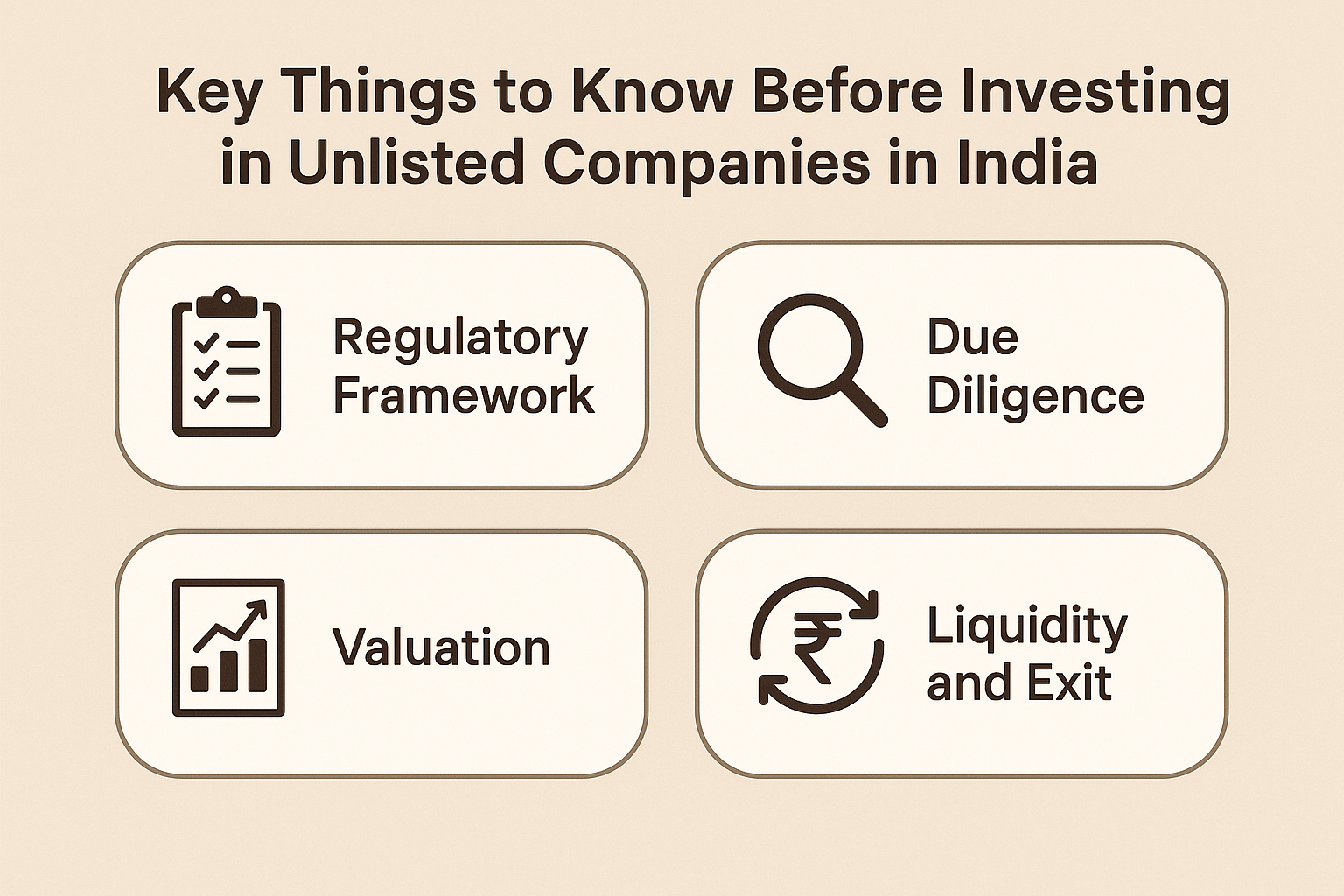
In the realm of investment opportunities, unlisted companies in India represent a compelling yet often misunderstood avenue for wealth creation. At Dhan Kirti, we’ve guided numerous investors through this relatively uncharted territory, helping them navigate the unique challenges and capitalize on the distinctive advantages these investments offer.
The unlisted securities market in India has grown substantially, with an estimated market size of over ₹2 lakh crore according to recent industry reports. For discerning investors seeking diversification beyond traditional market instruments, unlisted equities present an alternative worth exploring provided you understand what you’re stepping into.
Understanding Unlisted Companies
Unlisted companies are privately held entities whose shares are not traded on public stock exchanges like the NSE or BSE. These companies operate outside the regulatory framework that governs listed entities, creating both opportunities and challenges for investors.
In 2023, private market investments in India reached approximately $27 billion, highlighting the growing interest in this sector. Many successful businesses choose to remain private for extended periods before considering public listings, allowing early private investors to potentially benefit from substantial value appreciation.
Key Considerations Before Investing
1. Limited Liquidity
Perhaps the most significant distinction between listed and unlisted investments is liquidity. When you invest in unlisted companies, exiting your position isn’t as simple as placing a sell order through your broker.
The unlisted securities market operates through private transactions between willing buyers and sellers. Finding a counterparty interested in your specific holdings can sometimes take weeks or months. This fundamental characteristic makes unlisted equities inherently suited for investors with patient capital and longer investment horizons.
2. Valuation Challenges
Determining the fair value of unlisted companies requires more effort and expertise than for publicly traded securities. Without market-determined prices and continuous trading, valuation becomes an exercise in fundamental analysis and comparable metrics.
Professional valuation methods typically include:
- Discounted Cash Flow (DCF) analysis
- Comparable company analysis
- Recent transaction prices
- Asset-based valuations
We recommend consulting with financial advisors who specialize in private equity valuations to ensure you’re not overpaying for your stake.
3. Information Asymmetry
Public companies must adhere to stringent disclosure requirements, regularly publishing audited financial statements and material developments. Unlisted companies operate under significantly reduced disclosure obligations.
This information gap means investors must conduct thorough due diligence, often requiring direct engagement with company management. Key questions to address include:
- What is the company’s business model and revenue streams?
- Who comprises the management team and what is their track record?
- What are the company’s growth projections?
- What are the potential exit strategies?
4. Regulatory Framework
While unlisted companies have fewer compliance requirements than listed counterparts, they still operate within a legal framework. As an investor, understanding these regulations is crucial.
Key regulations governing unlisted shares in India include:
- Companies Act, 2013
- Income Tax Act provisions
- SEBI (Alternative Investment Funds) Regulations (for institutional investments)
- Foreign Exchange Management Act (for overseas investors)
The regulatory environment for unlisted securities continues to evolve, with SEBI actively working to formalize certain aspects of the private market ecosystem.
5. Tax Implications
Tax treatment for unlisted shares differs from listed shares in important ways. As of 2024, long-term capital gains on unlisted shares are taxed at 20% with indexation benefits, while short-term gains are taxed at applicable slab rates.
The holding period requirement for classifying gains as long-term is 24 months for unlisted shares, compared to 12 months for listed equities. This tax differentiation should factor into your investment strategy and expected returns calculations.
Potential Benefits of Unlisted Investments
1. Higher Growth Potential
Many unlisted companies are in their growth phase, with significant expansion potential ahead of public listings. Early investors can potentially capture substantial value creation as these companies scale operations and improve profitability.
According to PMS AIF World, several unlisted companies have delivered returns exceeding 100% upon listing through IPOs in recent years. This growth potential represents a compelling reason for considering these investments.
2. Portfolio Diversification
Unlisted shares often have lower correlation with public market movements, providing genuine diversification benefits to investment portfolios. During periods of public market volatility, private investments may exhibit more stability, being valued on fundamentals rather than market sentiment.
3. Pre-IPO Opportunities
Investing in companies before they go public through IPOs can be particularly rewarding. Recent examples include Paytm, Zomato, and PolicyBazaar, where early private investors saw significant returns upon public listing.
The pre-IPO market has become increasingly active in India, with specialized funds and platforms facilitating investments in companies with clear listing potential. Data from Prime Database indicates that companies going public in 2023 delivered an average listing gain of approximately 29%, highlighting the potential reward for pre-IPO investors.
How to Invest in Unlisted Companies
1. Through Intermediaries
Various intermediaries specialize in facilitating unlisted share transactions:
- Unlisted share brokers
- Pre-IPO platforms
- Wealth management firms (like Dhan Kirti)
- Alternative Investment Funds (AIFs)
These intermediaries provide access to opportunities and often assist with due diligence and transaction logistics.
2. Direct Investment
For larger investments, direct negotiation with company promoters or existing shareholders is possible. This approach requires substantial research capability and legal expertise to structure agreements that protect investor interests.
3. Alternative Routes
Other avenues for private market exposure include:
- ESOPs (for employees of private companies)
- Investment in holding companies with stakes in unlisted entities
- Angel investment networks for early-stage companies
Due Diligence Essentials
Before committing capital to unlisted companies, comprehensive due diligence is non-negotiable. Our recommended due diligence checklist includes:
- Financial Analysis
- Review at least 3 years of financial statements
- Assess revenue growth trends and profitability
- Evaluate debt levels and cash flow patterns
- Management Assessment
- Examine the track record of key executives
- Understand ownership structure and potential conflicts
- Assess governance mechanisms
- Business Model Evaluation
- Understand competitive advantages and market position
- Evaluate scalability and growth constraints
- Identify key risks to the business model
- Legal Review
- Verify corporate compliance status
- Check for pending litigation
- Review shareholder agreements and rights
- Exit Potential
- Assess likelihood and timeline for IPO
- Identify potential strategic buyers
- Understand secondary market liquidity options
Common Pitfalls to Avoid
- Overvaluation Risk: Private markets sometimes exhibit valuation bubbles, particularly in trendy sectors. Assess valuations critically against fundamentals.
- Minority Shareholder Challenges: Without protections afforded to public market investors, minority shareholders in private companies may have limited influence. Understand your rights before investing.
- Documentation Gaps: Ensure all transaction documentation properly reflects your ownership and associated rights. Incomplete paperwork can create complications during exit.
- Overconcentration: Despite potential returns, maintain appropriate position sizing. Experts recommend limiting unlisted investments to 10-20% of a diversified portfolio.
Future Outlook for Unlisted Investments in India
The unlisted securities market in India is evolving rapidly. Several trends worth noting include:
- Increasing Formalization: Regulators are bringing more structure to private markets, potentially improving transparency and liquidity.
- Technology Enablement: Digital platforms are making unlisted investments more accessible to a broader investor base.
- Growing Institutional Interest: Private equity and venture capital investments in India reached $34 billion in 2023, reflecting strong institutional confidence in private markets.
- Pre-IPO Market Expansion: With a robust IPO pipeline, the pre-IPO segment continues to attract interest from sophisticated investors.
Conclusion
Investing in unlisted companies in India offers a unique blend of challenges and opportunities. While these investments require greater due diligence, patience, and risk tolerance, they also present potential for superior returns and portfolio diversification.
At Dhan Kirti, we believe that a carefully considered allocation to quality unlisted companies can enhance overall portfolio performance for investors with appropriate time horizons and risk appetites. Our expertise in this domain allows us to guide clients through the complexities of private market investments.
If you’re considering unlisted equity investments, we recommend starting with a thorough assessment of your investment objectives, risk tolerance, and liquidity needs. With proper research and guidance, unlisted companies can become a valuable component of your wealth creation journey.
FAQs About Investing in Unlisted Companies in India
What is the minimum investment amount required for unlisted shares?
There’s no official minimum amount mandated by regulators, but in practice, most unlisted share brokers and platforms have a minimum ticket size, often starting around ₹1–5 lakh per transaction. Some pre-IPO platforms may offer lower entry points for select opportunities.
Are unlisted shares riskier than listed shares?
Yes, unlisted shares generally carry higher risk due to lower liquidity, limited information disclosure, and valuation uncertainties. However, they also offer higher potential rewards for long-term, informed investors.
How can I sell my unlisted shares?
You can sell unlisted shares through private negotiations, unlisted share brokers, or secondary market platforms that specialize in such transactions. The process can take longer than selling listed stocks on an exchange.
Are unlisted shares legal to buy and sell in India?
Yes, buying and selling unlisted shares is completely legal in India, as long as the transactions comply with the Companies Act, SEBI guidelines (if applicable), and tax laws.
What taxes apply on profits from unlisted shares?
As of 2024, long-term capital gains (holding period > 24 months) from unlisted shares are taxed at 20% with indexation benefit. Short-term gains (holding ≤ 24 months) are taxed at your applicable income tax slab rates.